Tour Plan
Expand allCollapse allWhat to do and see in Lake Mburo National Park
Wildlife game drives
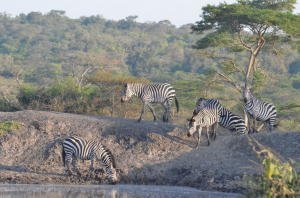
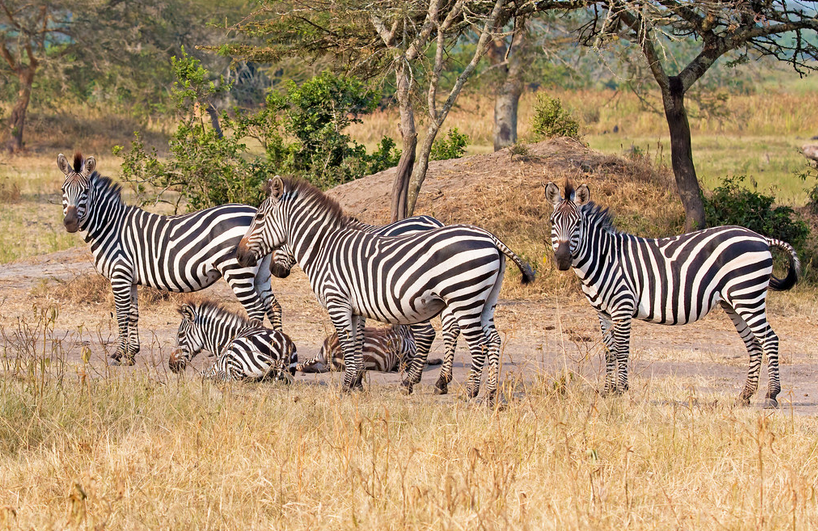
Game drives through the park generally allows you to see many animals and birds. However, sometimes the ranger is needed on board to point out the various species of birds and mammals. Lake Mburo National Park is the only park in Uganda with Elands, Impala as well as Topis. Game drives prove to be rewarding with leopards and at time lions as well as different wildlife species. Note that, early morning and evening drives provide the best light for photography and the highest chance of spotting elusive species.
Boat Safaris
A boat ride on Lake Mburo basically gets you in touch with the flora and fauna of the Lake. Along the banks, you will see lots of animals quenching their thirst especially during the dry season. Animals to spot include; hippos, crocodiles, otters as well as buffaloes, zebras, etc. In fact, a boat safari on Lake Mburo allows you to see both crocodiles and hippos up close in their natural habitat. Besides, animals, you are also able to spot different bird species like the kingfishers, egrets, cormorants, darters, herons, eagles, not to mention but a few.
Birding
Lake Mburo National Park is one of the best place for birding in Uganda with over 350 species of birds. Birds to look out include; African finfoot, Go-away-bird, Yellow breasted Apalis, Nubian woodpecker, African fish eagles, Ross’s Turacco, etc. Furthermore, forest edges, wetlands and open savanahs provide diverse habitats for birders to explore. Rubanga Forest is especially a great place for birders and over 40 species of birds have been recorded here. Trees found in this forest include; Markhamia, Platycaluz, Acacia, Palm, Fig trees, among others. This forest provides a variety of habitats, which are great for birds thereby making it a special forest for bird watchers. Birds here include; shoebill stork, harrier hawk, green pigeon, narina trogon, Grey-backed camaroptera and double-toothed barbet.
Nature Walks
On an early morning guided walk you often encounter hyenas returning to their dens after a night of being on the prowl. You can as well see hippos returning from grazing during the night. You can also spot them return to Lake Mburo to keep cool during the day and protect their sensitive skin from the sun. During the nature walk, you will often see Zebras, Giraffes, Eland, Topi, buffaloes, etc birds and butterflies. Take the trail to the top of the hills and see Lake Mburo and beyond. Actually, from this vantage point you have a great view of 9 of the regional lakes found in the area.
Salt Lick
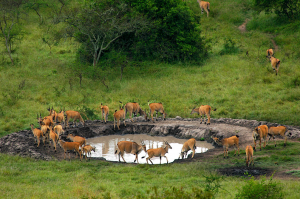
Salt licks are places where animals gather to eat soil rich in essential minerals. From safe viewing points, visitors easily watch zebras, impalas, warthogs not to mention but a few as they enjoy this natural treat. In fact, this spot also grants tourists a great chance to take photos as well as videos as they learn about animal feeding habits. Guides explain why these minerals are important for wildlife health. Altogether, salt licking is a simple yet fascinating way to observe animals up close.
Host back riding
The activity is organized by Mihingo Eco Lodge in guidance for an experienced park guide and it is interesting activity to see wildlife at a closer view. Besides, the activity makes you feel part of nature seeing zebras and elands closely in a more peaceful environment without vehicle sounds. This activity basically takes 1-3 hours as you explore the beauty of the park coupled by the view of the wild game
How to get to Lake Mburo National Park
The park is accessed mainly by road which is 228 kilometers from Kampala and the drive takes about 3-4 hours. However, this depends on the road conditions and whether or not you make some stopovers along the way. Stopovers include; drum makers at Mpambire trading centre and the Equator at Kayabwe.
Driving from Kampala or Mbarara, the park is accessed using 2 Gates. From Mbarara, the first gate is Sanga gate accessed through Sanga trading centre while the next one is Nshara gate. It is about 2 kilometers from each of the gates to arrive Rwonyo where the park headquarters are found.
Accommodation in Lake Mburo National Park
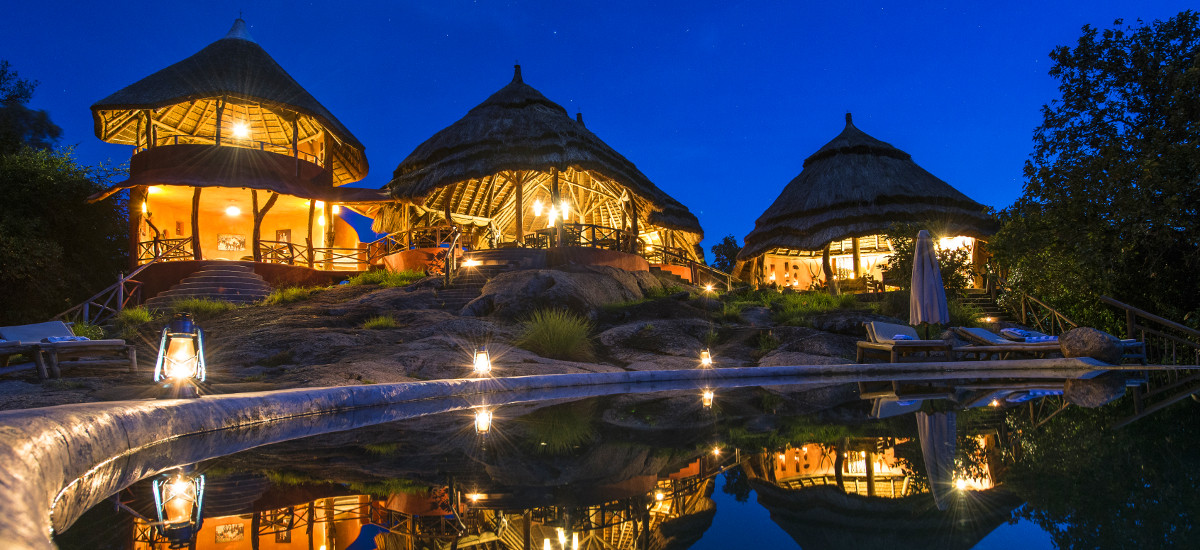
There are quite a number of accommodation facilities found around and within the park. In fact, these can cater for all types of holidaymakers depending on one’s budget. You can book your accommodation through our company however, early bookings are advised.
Mantana Tented Camp
It is basically a mid-range accommodation establishment where you can spend an overnight. Comprised of nine rooms which are well spaced perched in open woodland close to a hill top approximately 4km from the shores of Lake Mburo.
Mihingo lodge
This is actually one of the up market safari lodges in Uganda. It is perched on the ancient Mihingo rock at the boundaries of Lake Mburo National Park. In addition, Mihingo safari lodge offers luxury accommodation to Uganda safari undertakers. The counts of 10 rooms are set on wooden platforms with stilts and are covered with thatched roof.
Arcadia cottages
This generally provides comfortable cottages in the heart of the park near the lake shore. Note that; the restaurant has a deck with a view of the lake.